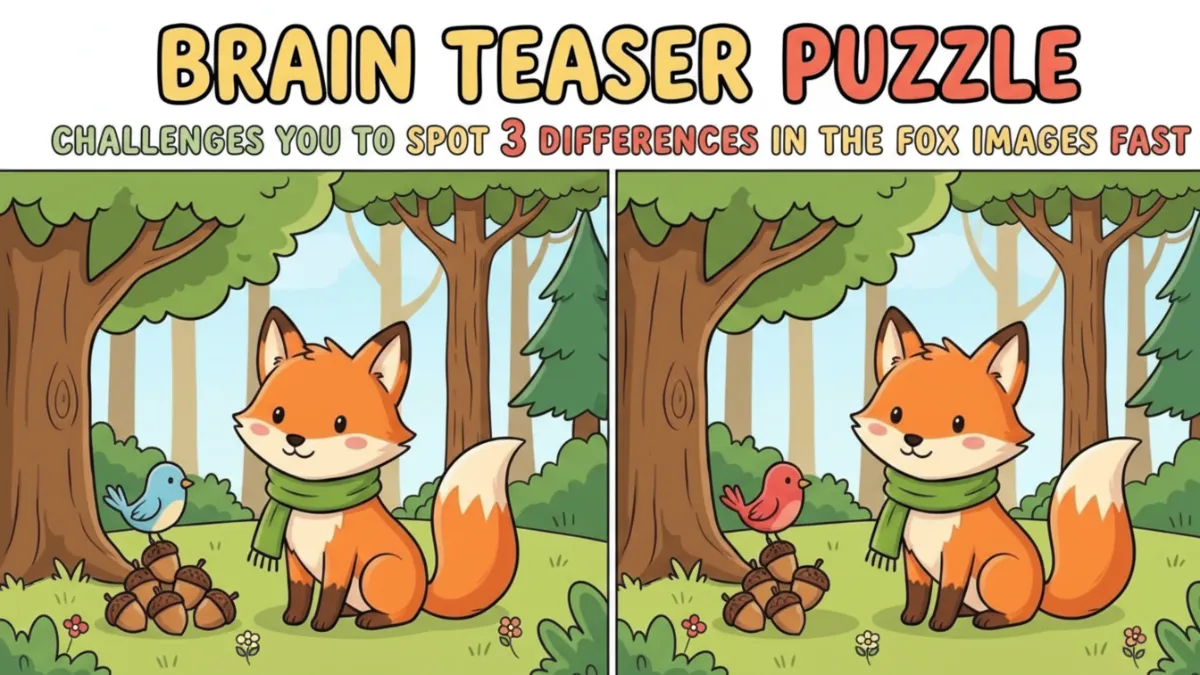
Brain Puzzle Challenge Visual brain puzzles are one of the most entertaining ways to test your observation skills and boost mental sharpness. Today’s challenge is simple yet surprisingly tricky: spot three differences between two fox images as quickly as possible. At first glance, the pictures may look identical, but hidden within small details are subtle changes that only sharp eyes can detect.
Brain teasers like this are not just fun—they are excellent exercises for improving concentration, memory, and attention to detail. Whether you’re taking a quick break from work or challenging friends and family, this fox puzzle is designed to put your visual skills to the test.
The Fox Puzzle Challenge
Take a close look at the two fox images above. Your mission is to identify three small differences between them. Set a timer for 30 seconds if you want to make it more exciting. Pay attention to the background, the fox’s facial expression, tail shape, colors, and tiny surrounding elements. Often, the differences are hidden in plain sight.

Remember, the key is focus. Avoid rushing too quickly—your brain needs a few seconds to properly scan each detail.
Why Brain Puzzles Are Good for You
Spot-the-difference puzzles stimulate multiple areas of the brain. They enhance visual processing speed, strengthen short-term memory, and improve problem-solving skills. Studies show that regularly engaging in visual challenges can sharpen cognitive abilities and even reduce mental fatigue.

These puzzles also train your brain to notice subtle inconsistencies, which is a valuable skill in daily life—from proofreading documents to driving safely.
Tips to Spot Differences Faster
When solving visual puzzles, start by scanning the image from top to bottom instead of randomly looking around. Compare one section at a time. For example, begin with the fox’s ears, then move to the eyes, then the tail, and finally the background elements like trees or flowers.

Another helpful trick is to slightly squint your eyes. This can sometimes highlight variations in color or shape more clearly. Staying calm and focused is more effective than rushing.
Did You Find All Three?
If you spotted all three differences in under 30 seconds, congratulations! You likely have excellent attention to detail and strong visual memory. If not, don’t worry—brain puzzles improve with practice. The more you challenge yourself, the sharper your observation skills will become.

Try sharing this puzzle with friends and see who can solve it the fastest. A little friendly competition makes it even more fun.
How do these puzzles improve brain function?
They enhance concentration, visual memory, and analytical thinking by forcing the brain to compare details carefully.

Are brain puzzles suitable for all ages?
Yes, they are beneficial for children and adults alike. They help kids develop focus and help adults maintain cognitive sharpness.
How often should I do brain puzzles?
Even 5–10 minutes a day can make a noticeable difference in mental alertness and memory.