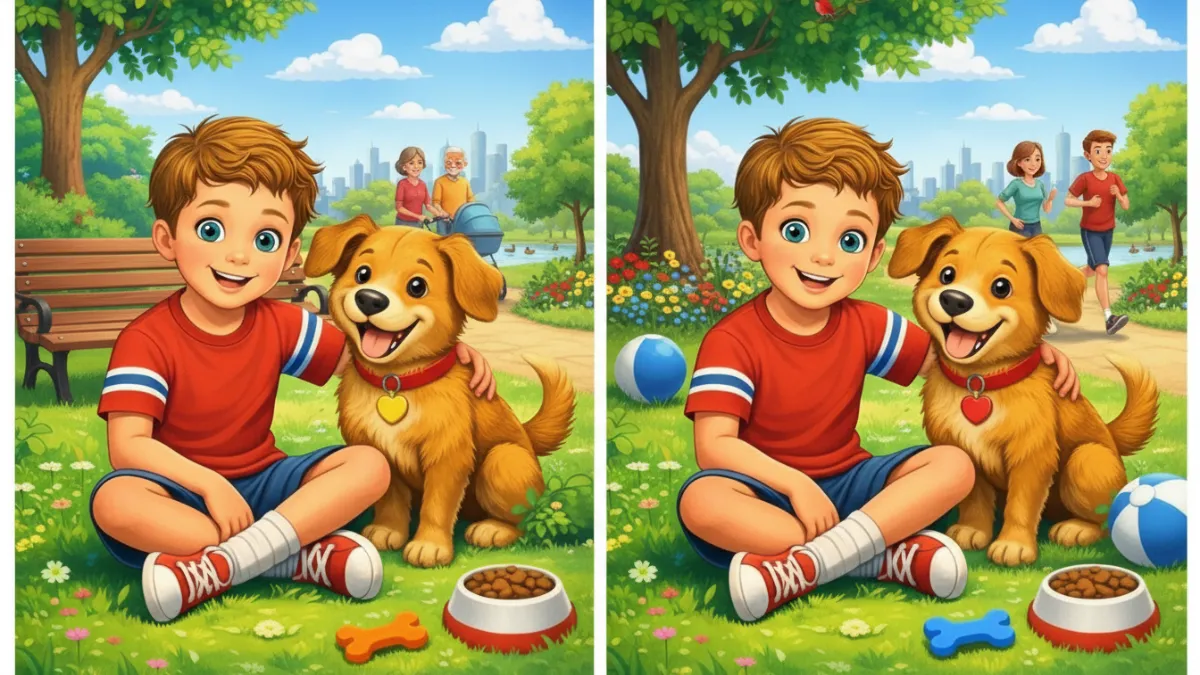
Can You Find the 3 Hidden Changes Visual puzzles are a fun and powerful way to sharpen your observation skills. In today’s challenge, you’re asked to spot three hidden differences between two nearly identical images featuring a cheerful boy and his loyal dog. At first glance, both pictures appear the same. But look closely—tiny details have been cleverly altered. Only sharp eyes and focused attention will uncover them quickly.
These types of brain teasers are more than simple entertainment. They stimulate cognitive function, improve memory retention, and train your brain to notice subtle inconsistencies. Whether you’re solving this alone or challenging friends, this puzzle promises a quick mental workout.
The Boy and Dog Puzzle Challenge
Carefully examine the images above. Your mission is to identify three small differences between them. Focus on the boy’s clothing, the dog’s expression, background details like trees or clouds, and any small objects nearby. Differences often appear in unexpected places—such as a missing button, a changed color, or a slightly altered shape.

If you want to make it more exciting, set a 30-second timer and test your speed. The faster you find the changes, the sharper your visual processing skills may be.
Why Spot-the-Difference Puzzles Boost Brain Power
Visual comparison puzzles activate multiple areas of the brain responsible for focus, pattern recognition, and short-term memory. They encourage patience and structured thinking. Regular practice can help improve attention to detail, which is useful in daily tasks like proofreading, driving, or even problem-solving at work.

These puzzles are suitable for both children and adults, making them a perfect family-friendly activity.
Tips to Find Hidden Differences Faster
Start by scanning the image from left to right instead of jumping randomly. Compare one section at a time, such as the boy’s face first, then his outfit, then the dog, and finally the background elements. Looking at shapes and outlines rather than colors alone can also help reveal subtle changes.
Stay calm and avoid rushing. Sometimes stepping back for a moment allows your eyes to reset and notice details you initially missed.
Did You Spot All Three?
If you found all three differences quickly, congratulations! You likely have excellent observational skills. If you’re still searching, don’t worry—these puzzles are designed to trick the eyes. The more you practice, the better you become at identifying fine details.

Share this challenge with friends or family and see who can solve it the fastest. A little friendly competition makes brain training even more enjoyable.
How do visual puzzles improve memory?
They train the brain to store and compare visual information quickly, strengthening short-term memory skills.

Are these puzzles good for kids?
Yes, they help develop concentration, patience, and analytical thinking in children.
How often should I practice brain puzzles?
Just a few minutes daily can significantly improve focus and cognitive sharpness over time.